






Bluefin Tuna Migration: The Spring Run
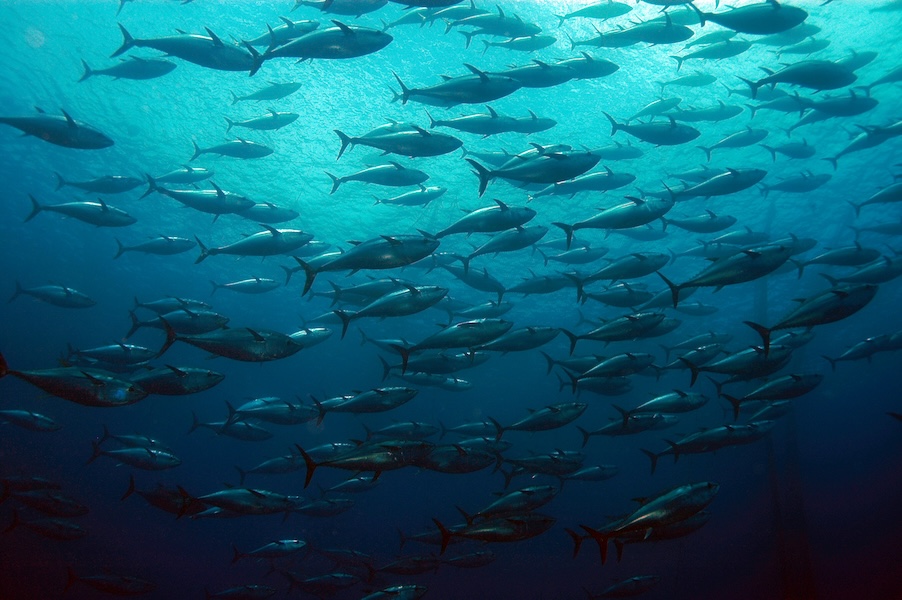
Every year, as winter gives way to spring, vast schools of Atlantic Bluefin tuna begin to stir in the cold waters of the North Atlantic.
For centuries, they have embarked on the same journey, following routes that seem immutable, an ancient calling etched into their very genetic code.
Starting in April, thousands of mature specimens leave the ocean and pass through the Strait of Gibraltar to enter the Mediterranean, drawn by warmer, shallower waters: the ideal environment for spawning.
A fascinating fact: for long periods, Bluefin tuna move in small groups, a phase biologists define as erratic. However, with the onset of the breeding season, their behavior shifts: these groups congregate into massive schools and begin their migration toward the spawning grounds.
The Journey across the Mediterranean
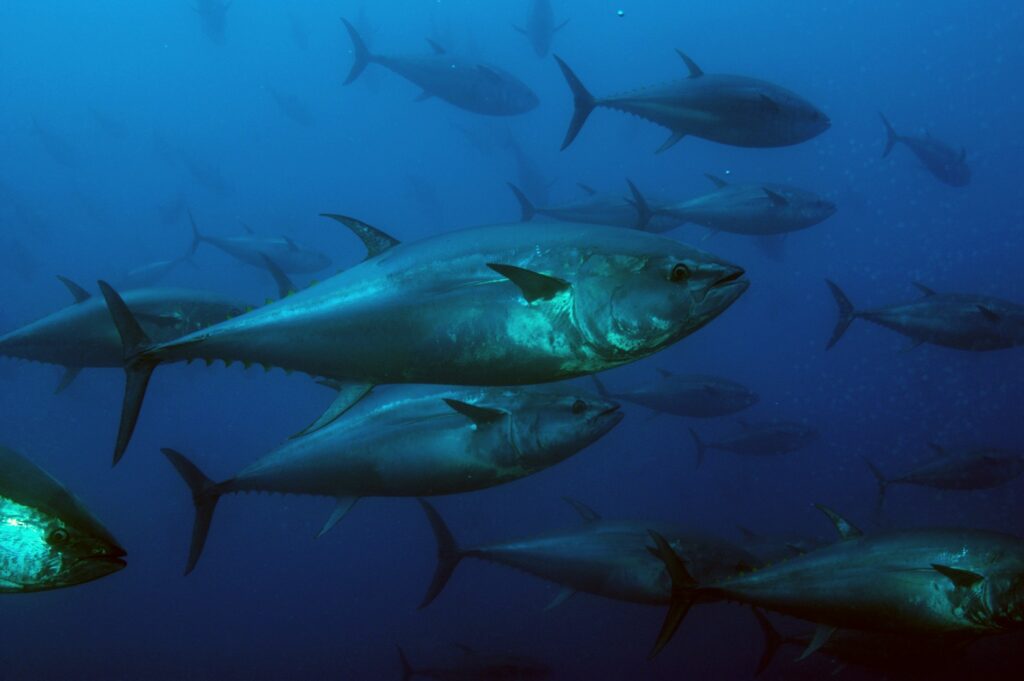
After passing through Gibraltar, the tuna take advantage of the cooler surface currents and head eastward. They often swim close to the coast, as if guided by an invisible compass.
Local fishermen say that the tuna seems to “watch” the land with its left eye, following the shoreline without ever losing sight of it as it travels from west to east.
Once they enter the inland sea, the schools split: some follow the North African coast, while others track along the Iberian Peninsula.
Near the Balearic Islands, a portion of the latter group veers toward Sardinia, embarking on a route that brushes past Capo Pecora and flows along the historic tuna traps of Sulcis, such as the one in Carloforte.
The Origins of the Tuna Trap: Between Science and Legend
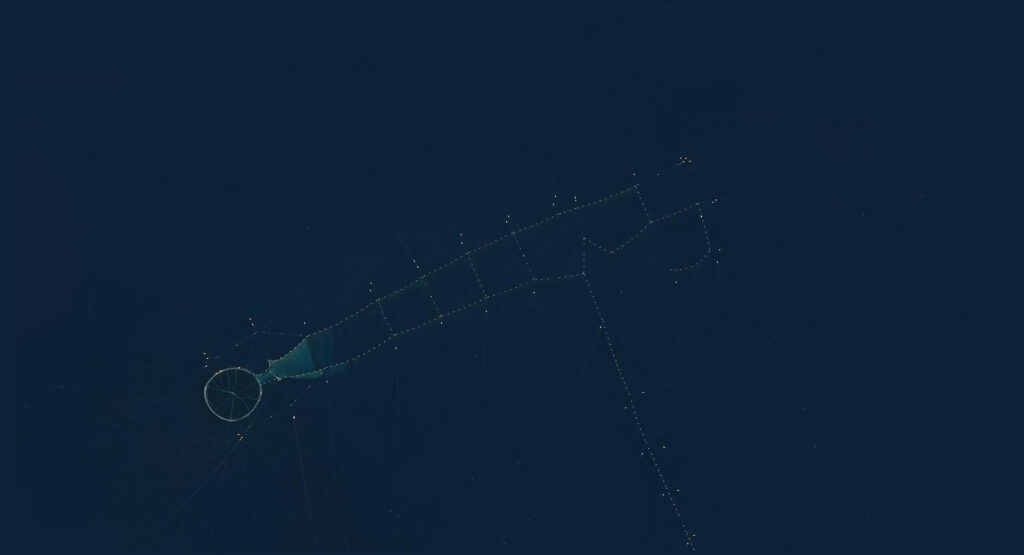
Because tuna routes are never random but tend to repeat year after year, centuries of observation led to the creation of the tonnare. These are ingenious systems of fixed nets arranged like an open-sea labyrinth, meticulously designed to intercept the fish during their journey.
According to a Sardinian legend, the idea for the tuna trap was born from the intuition of a young shepherd. While grazing his flock on a mountain overlooking the sea, he would watch the tuna passing close to the coast and wonder how they could be caught.
As the story goes, he one day observed a spider weaving its web. From that image, the design of the great net was born, a system that, even today, guides the tuna toward the catch.
Ancient Wisdom
Once the spawning season draws to a close, the journey is reversed. In autumn, the tuna leave the Mediterranean and head back toward the Atlantic, this time taking advantage of the warmer currents that flow deep beneath the surface.
The knowledge of this millennial cycle has always guided the work of the tonnare. Their very success depended on the ability to intercept the exact moment of the migration.