






The Tonnara of Carloforte: A Four-Century Legacy
The narrative of Carloforte Tonnare begins in 1654, when King Philip IV of Spain granted the Genoese banker Gerolamo Vivaldi the management of all Sardinian tuna traps, which were then part of the Royal Crown’s heritage.
This marked the dawn of an entrepreneurial and human adventure destined to leave a profound mark on the island’s culture and economy.
In 1671, Vivaldi officially acquired the fisheries and decided to establish an innovative facility in Portoscuso, where he planned to revolutionize the traditional tuna processing methods.
From Pastorino to Greco: A Story of Family, Territory, and Vision
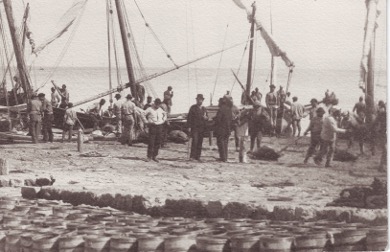
With the Unification of Italy, the stewardship of the fisheries passed to Pasquale Pastorino.
He was the one who understood that to safeguard production, it was essential to look forward: he built a new, more modern, and healthier plant on the island of San Pietro to overcome the hygiene issues, and the malaria, that had affected the older facility.
It was the late nineteenth century, and the Carloforte Tonnara was already becoming a strategic hub for Sardinia’s fishing economy.
In recent decades, the survival of the Tonnare is primarily thanks to the Greco Family.
Specifically, the attorney Salvatore Greco played a central role in safeguarding not only the fishing business but also the cultural and environmental identity tied to the traditional fixed tonnare.
Greco was more than just an administrator: he was a passionate custodian of secular practices, a bridge between the past and the future.
He fiercely defended the traditional fixed trap method, resisting the industrial drift and promoting a sustainable fishing approach compatible with Mediterranean biodiversity.
Today, the family continues this mission with the same dedication: every season, every net cast into the sea, every barrel filled tells a chapter of their enduring story.
Gazing Towards the Future, Rooted in the Past
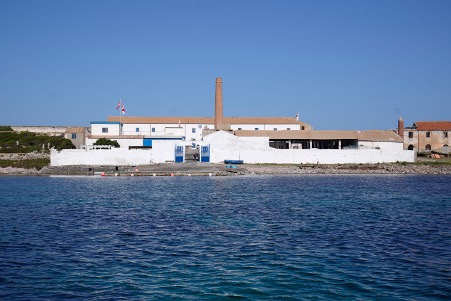
The Tonnara of Carloforte stands as a living testament to a unique way of engaging with the sea, labour, and tradition.
It is a legacy that passes from hand to hand, from generation to generation, without ever losing its soul.
Today, this journey continues with the same spirit with which it began: respect for nature, attention to people, and a profound love for an ancient craft that looks ahead, yet never forgets its origins.